
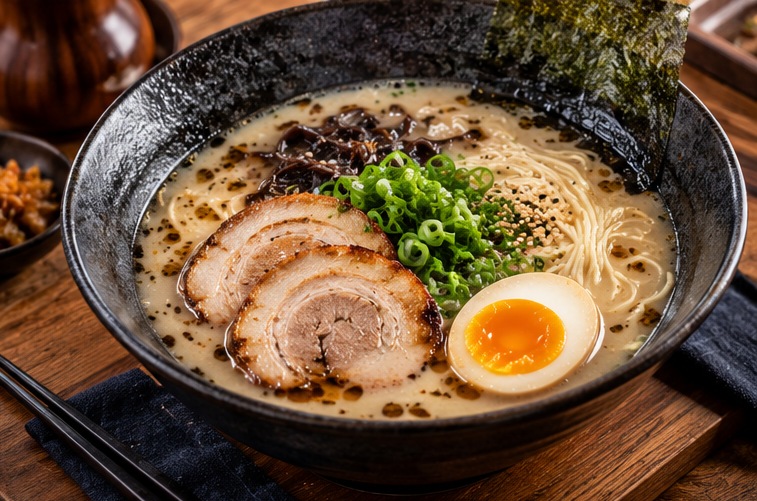
Tonkotsu is mostly patience. There is no clever step, no shortcut ingredient — only a pot that cannot be hurried and someone willing to watch it.
Midnight: The Pot Goes On
Bones go in cold water and come up slowly. The first hour is spent skimming, and it is the least glamorous work in the kitchen. Anything left on the surface now will taste muddy twelve hours later.
Four in the Morning: The Turn
Somewhere around hour four the liquid stops being water with bones in it and starts being broth. The colour shifts, the body thickens, and the smell changes from raw to round. Miss this window and the texture never recovers.
The three things we adjust
- Heat — a rolling boil for body, never a simmer
- Water level — topped up only in the first half
- Time — tasted hourly from hour eight
Noon: Service
By the time the first bowl goes out, the pot has been going for twelve hours and will be finished by closing. Tomorrow’s starts tonight.
A good broth is not seasoned into shape at the end. It either has body by hour eight or it does not.
That is the whole method. The rest is noodles, a soft egg, and not keeping anyone waiting once the bowl is up.